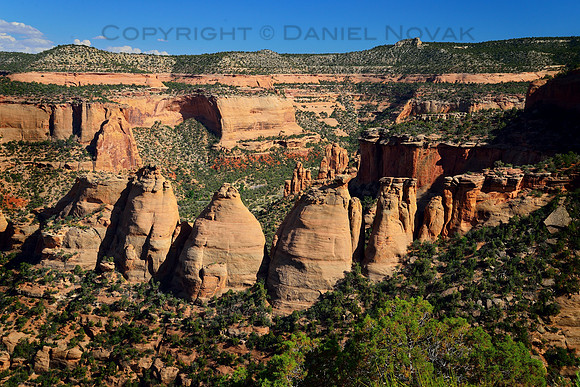
Colorado National Monument allows for stunning views along its Rim Rock Drive and trails starting alongside. Here, Coke Ovens show the power of erosion.
The point located in a side canyon off of the main Monument Canyon has eroded into a series of fascinating domes known as Coke Ovens. A firm layer of capstone protects a lower layer of Windgate Sandstone, delaying its erosion. The unique formation is named after the dome-shaped ovens that were used to produce coal coke from coal.
(Coal Coke is created by cooking Coal in a Coke Oven. It is a highly effective fuel, essentially producing double the heat content of coal.)
Colorado National Monument is near Grand Junction, and Fruita, Colorado. It's history as part of the National Park Service goes back to 1907 and John Otto who explored the area and established first trails there.He also campaigned for the area becoming a national park, which has not happened to this day. However, in 1911 the 27th president William Howard Taft established the Colorado National Monument. In 1921 the first motorized route into the monument opened, called the Serpents Trail. The construction Rim Rock Drive started in 1931.
The Monument rises about 2,000 feet above the Grand Valley of the Colorado River. It is a part of the greater Colorado Plateau, the same plateau that is hosting the Grand Canyon, Bryce Canyon, and Arches national parks.
References:
-
Coke Ovens Trail on Hikespeak.com-
Cole Coke on Railcraft-
Nature and Science of Colorado National Monument© Daniel Novak Photo - Landscapes, Architecture, Cityscapes