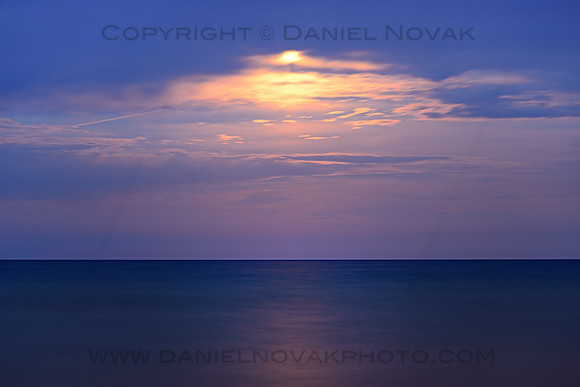
This photograph captured from the shore of Lake Michigan at Illinois Beach State Park shows the Harvest Super Moon of 2014, a September full moon, about half an hour after it rose. However, this photograph is about the mood of a moonlit night rather than the size of that celestial body. The moon was just becoming to hide behind a layer of clouds and created this wonderful natural scene over the vast waters of one of the Great Lakes.
Harvest Moon is the full moon closest to the autumnal equinox, and depending on the year, the Harvest Moon can come anywhere from two weeks before to two weeks after the autumnal equinox.
In the Northern Hemisphere, the Harvest Moon most often falls in September but sometimes falls in early October.
In the Southern Hemisphere, the autumn equinox falls on March; the Harvest Moon occurs in March or April then.
The 2014 Harvest Moon qualifies as a supermoon because the moon turns full less than one day after reaching lunar perigee (the moon’s closest point to Earth for the month).
References:
-
Everything you need to know: The super Harvest Moon of 2014-
What Is A Harvest Moon? NASA Explains The Science-
Full Moon Names and Their Meanings at Farmers' Almanac