
- Home
- | Galleries ▼
- | Collections ▼
- | About ▼
- | Blog
- | Zines
- | Login
Home»Blog
Welcome to my blog! Read about photography, film photography in 35mm, medium, and large formats, pinhole photography, about darkroom printing, alternative photographic processes, and more. Thank you for visiting!
Indoor Photo Project - Recycling at its Best and Free Heat
 Recycling Abstract
 Yes, there may be a free party after all. With just a little initial initial investment you can use your free junk mail as a source of heat if you have a wood-burning fire place or stove. You shred the junk mail, soak it in water for a bit, then use a paper briquette maker to press the mushy paper into briquettes and let them dry. Not only do you get free heat but there's definitely no way someone will reassemble the shredded pieces!
No, it's not perfect. Paper is not what it used to be and some is more plastic than paper and some pretty much does not burn. You can either shred it all or do some pre-sorting. Unless you pre-sort well, these briquettes will not burn too well on their own but will do well in an already burning fire as a supplement.
And as you can see, it can also be fun. I enjoyed looking along the sides of a freshly made briquette to see what colors, patterns, and shapes catch my eye. Here's one of such spots.
If you're interested, the press is not all that expensive. As of this writing, around $50 on Amazon. You will also need a shredder, and a bucket.
- Nikon D200 (my D600 is with Nikon for cleaning again!)
- Nikkor 50mm f/1.8 (or the newer AF-S version)
- Kenko extension tube set
- 1 x SB-600 (now replaced with Nikon SB-700)
- A freshly made wet paper briquette
- Shredder, bucket, water
Using my links to buy your equipment keeps me going and costs you nothing. You can also use the Amazon search box in bottom left for anything not mentioned here. Thank you very much, I really appreciate it!
My previous Indoor Projects:
- Indoor Photo Project - Water Gone Wild, Vividly and Colorfully Wild
- Indoor Projects - Shells
- Indoor Projects - Aquarium Photography
- Indoor Projects - Take Notes
Photo Contests September 2013
Annual or One-Time Contests:
- Savewater's International 2013 Photographic Competition - by September 30, 2013
- Pop Photo's 2013 Readers Photo Contest - by October 20, 2013
- 1x Photo Awards 2013 - by November 30, 2013
- Buffalo Botanical Gardens Digital Photo Contest - by December 31, 2013 - 1 free entry, then $6 / 1 entry
Monthly Contests:
- National Geographic's Your Shot - by September 14, 2013
- National Geographic's The Night photo assignment - by September 23, 2013
- Pop Photo's Your Best Shot September 2013 - by September 30, 2013
- Shoot the Land's Monthly Landscape Photo Contest - by September 30, 2013
- Pop Photo's September 2013 Photo Challenge - Family and Friends Candids - by October 4, 2013
Weekly Contests:
- 1x Weekly Theme: Cats - by September 15, 2013
- 1x Weekly Theme: Decay - by September 29, 2013
- Outdoor Photographer's Assignment #152: Summer Landscapes - by September 17, 2013
- Outdoor Photographer's Assignment #146: Fall Color - extended through October 31, 2013!
See Photo Contest Insider for many more ...
Have fun creating and submitting your entries!
The Last Light at Chimney Bluffs and The Missing Beach
 Sunset over Chimney Bluffs
Chimney Bluffs State Park offers quite an experience in a quite unexpected place. When I first saw the bluffs several years ago I could not believe I was still in New York State. The rock formations are like something one could imagine in Colorado, Arizona, or Utah, but not anywhere on the East Coast. At least I would not.
After a few years it was time to revisit the place under different conditions, different season, different time of day (The Location Revisiting Series: Revisit Your Locations, Revisiting Locations Revisited, The Changes at Eighteen Mile Creek, Winter's Turn, Back to the Pier for a Winter Look, The Seasons at Emery Park, a Year-Long Photo Project, Back at the Elevator for a Different Take).
It was a blast!
One surprise about this visit to the Bluffs was the beach, or the lack of! I remembered a nice size beach from my previous visit and my original plan for this evening was to photograph the cliffs from the beach. There was no beach! Not even a foot, the cliffs went straight to the lake. Surprising? You bet! I was not sure what happened. Lake tide? The strong wind from the north? I'll have to do some research on that (keep reading) but it was one of those funny moments when you don't even know what to say. We walked down just a few feet to hit the beach trail only to be stopped by an unpassable cliff before we even picked up speed. Everything went according to the plan for about ... 5 seconds!
 The Last Light at Chimney Bluffs
Sitting at a computer later and going over the below topics, my conclusion is that "the missing beach" phenomenon was a combination of a seasonally high water level that peaked in July and has been slowly going down since, but not much by August 3, and strong wind from the north. If the topic sounds interesting, keep reading and follow the references.
Great Lakes Tides:
Great Lakes do not have enough water and area to exhibit significant tidal expressions as oceans do, only about 1 - 4 cm. Seiches, waves, rain, melt water, etc. all have a much bigger effect that often gets attributed to "tides". The strongest tides are experienced on Lakes Superior and Erie, often masked by weather conditions.
Sustained winds and barometric pressure can push the lake water up on one end of the lake and down on the other. When these conditions subside the lake water can oscillate back and forth before stabilizing, causing a seiche [sayshe].
This phenomenon can be the most pronounced on Lake Erie.
Seasonal water level fluctuations on the Great Lakes averages about 12 to 18 inches from winter lows to summer highs. Over the last century, the range from extreme high to extreme low water levels has been nearly 4 feet for Lake Superior and between 6 and 7 feet for the other Great Lakes.

The Day is Over at Chimney Bluffs
Sources:
- Do the Great Lakes have tides?
- Water Levels on Great Lakes (Water levels on the Great Lakes, Three types of water level fluctuations,
- Lake Ontario Water Levels (Real-Time Water Level Gauging Stations) (verified data only available through August 2, 2013)
- Center for Operational Oceanographic Products and Services (Lake Ontario Data)
Equipment used:
- Nikon D600
- Nikon 24-85mm Nikkor Lens
- Manfrotto tripod (055MF3) and head (496RC2)
- Cokin graduated ND4 filter
- Cokin P Holder with a 72 mm Adapter
- Think Tank Speed Demon Waist Pack, Petzl Zipka Plus 2 Headlamp (always in the bag just in case), SanDisk Extreme 32GB SD Cards
- Exposure delay mode of 2 seconds, no remote release
- Nikon Capture NX2
Using my links to buy your equipment keeps me going and costs you nothing. You can also use the Amazon search box in bottom left for anything not mentioned here. Thank you very much, I really appreciate it!
Buffalo Subway Collection
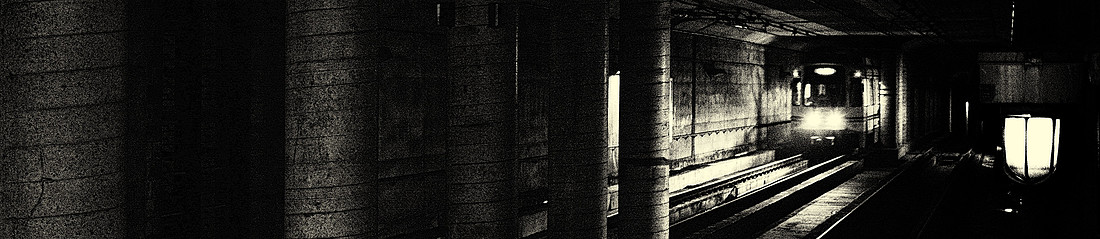
I have mentioned the topic a few times recently both in my blog and in my photo gallery from Buffalo. And here's my new thought about the state of Buffalo Metro Rail, this time in photos of my new Collection, Subway - Buffalo Metro Rail.
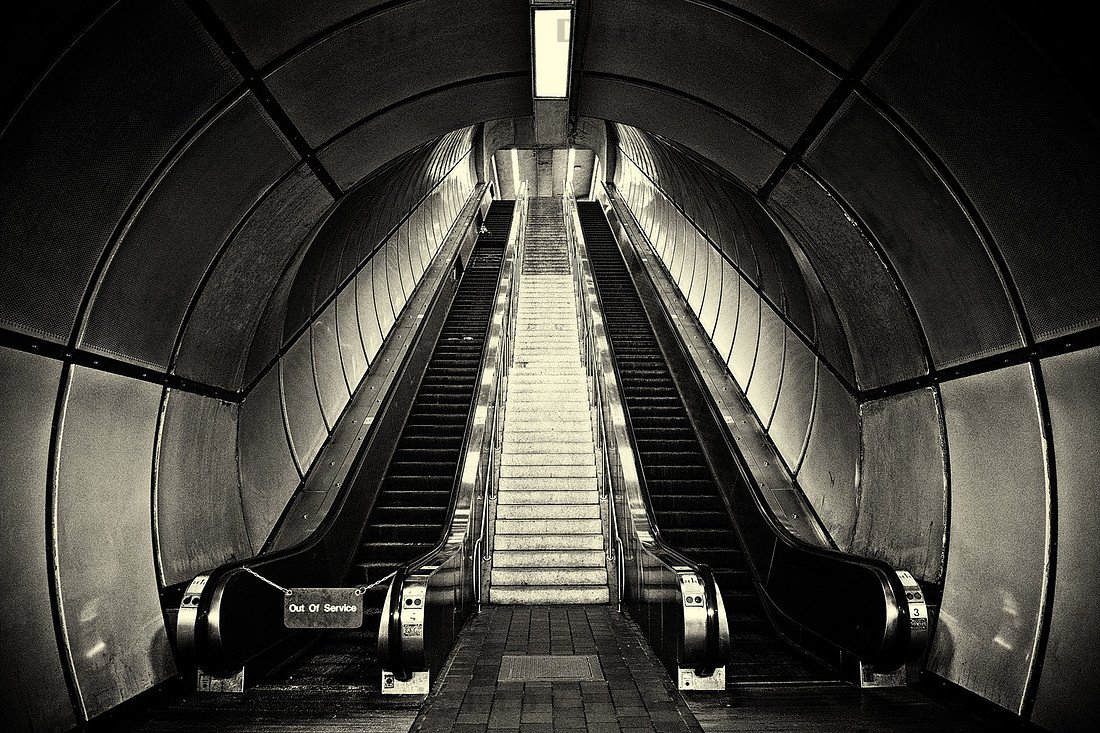 Escalator, Delavan - Canisius College Station
Have a fun ride!
Main Street Closed, Did You Get It?
I've posted several photos and blog posts from Buffalo's Main Street (Lines, light, and shadows at Summer - Best in Buffalo, History and Changes, Elements Getting in the Way?, Plan but Welcome the Random). Today it's just a quick thought from that street. Did you ever feel something was just a bit over the top?
 Main Street Closed
Road closed, do not enter, do not enter, road closed, do not enter!
Have fun and obey the signs!
Equipment used:
- Nikon D600
- Nikon 24-85mm Nikkor Lens
- Handheld, no tripod, no filters
- Think Tank Speed Demon Waist Pack, Petzl Zipka Plus 2 Headlamp (always in the bag just in case), SanDisk Extreme 32GB SD Cards
- Nikon Capture NX2